
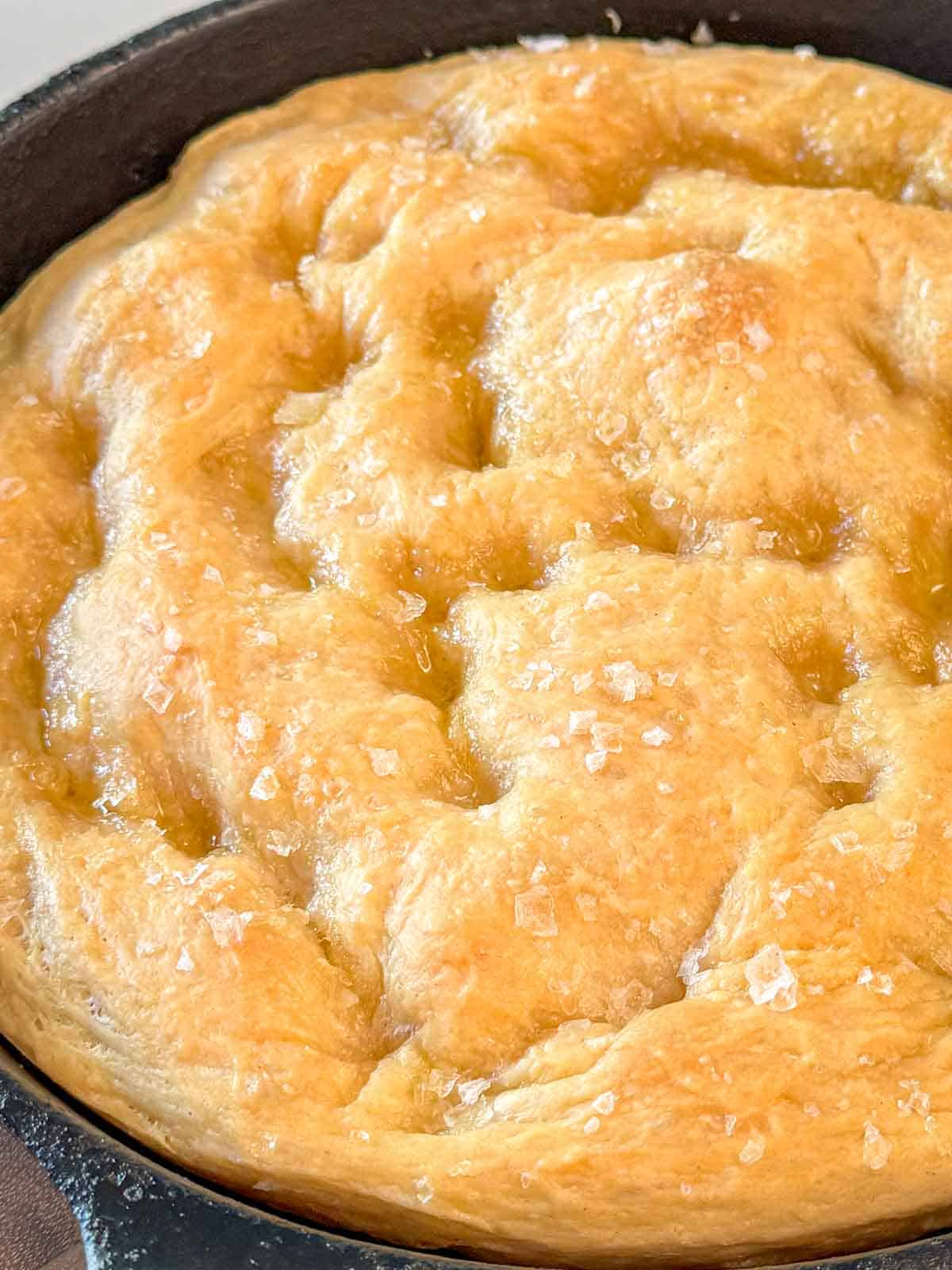
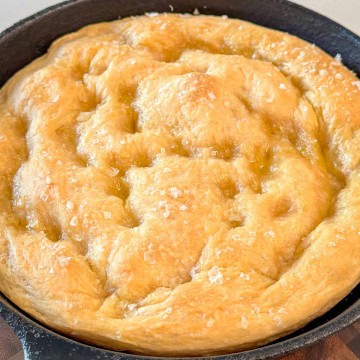
This easy focaccia bread recipe makes soft, fluffy, golden focaccia with crisp edges and airy bubbles, no fancy tools required. It's beginner-friendly, works same-day or overnight, and has been tested again and again for reliable results.
A Quick Look At The Recipe
⏱️ Ready In: 4-5 hours (same-day) or overnight.
👪 Serves: 12
🥣 Main Ingredients: Bread flour, yeast, olive oil, warm water, flaky sea salt
🎉 Best For: Beginner bread bakers, soup night, sandwiches, charcuterie boards, and homemade pizza dough.
⭐ Why It Works: The dough is transferred to the pan before the main rise, which reduces handling and helps preserve air bubbles.
⚠️ What to Watch For: The dough will feel sticky and that's the way it should be. Adding too much flour will reduce the airy texture.
🔥 Bake Temp: 450°F
⭐ Internal Temp: 200-205°F for doneness.
Jump to:
- A Quick Look At The Recipe
- Why This Recipe Works
- Ingredients for Homemade Focaccia
- Substitutions and Topping Ideas
- Flavor Variations
- How to Make Easy Focaccia Bread (Step-by-Step)
- Tips for Airy, Golden Focaccia
- Focaccia Troubleshooting Guide
- How To Serve Focaccia
- Focaccia Bread Recipe FAQs
- Storage and Make-Ahead
- If You Love This Focaccia, Try These Next
- 📖 Recipe
- 💬 Community
I tested multiple versions of this focaccia bread recipe before landing on this one. Traditional Italian focaccia from Liguria is known for its high hydration and olive oil richness, and I wanted a method that honored that structure while still being approachable for home cooks. This is the version I make for family dinners, Friday night boards, and when I want something impressive without stress.
Focaccia is a traditional Italian flatbread from Liguria, enriched with olive oil and known for its airy crumb and crisp, golden crust. Its signature texture comes from high-hydration dough and gentle dimpling before baking.
This easy focaccia bread recipe is great for family dinners, sandwiches & soups. It's the perfect side to serve with some cheesy parmesan risotto and as a base for beef tenderloin crostini, and on our Friday night charcuterie boards. You'll find more dinner inspiration in our Dinner Recipes collection, plus more classic favorites in our Midwestern Recipes collection.
Why This Recipe Works
- Truly beginner-friendly. No stand mixer #ad required.
- No kneading needed. Stretch-and-fold builds structure gently.
- Overnight option improves flavor. Slow fermentation deepens complexity.
- Bakery-style texture. Soft interior with crisp, olive-oil edges.
- Flexible for entertaining. Perfect for sandwiches, soups, or boards.
Ingredients for Homemade Focaccia
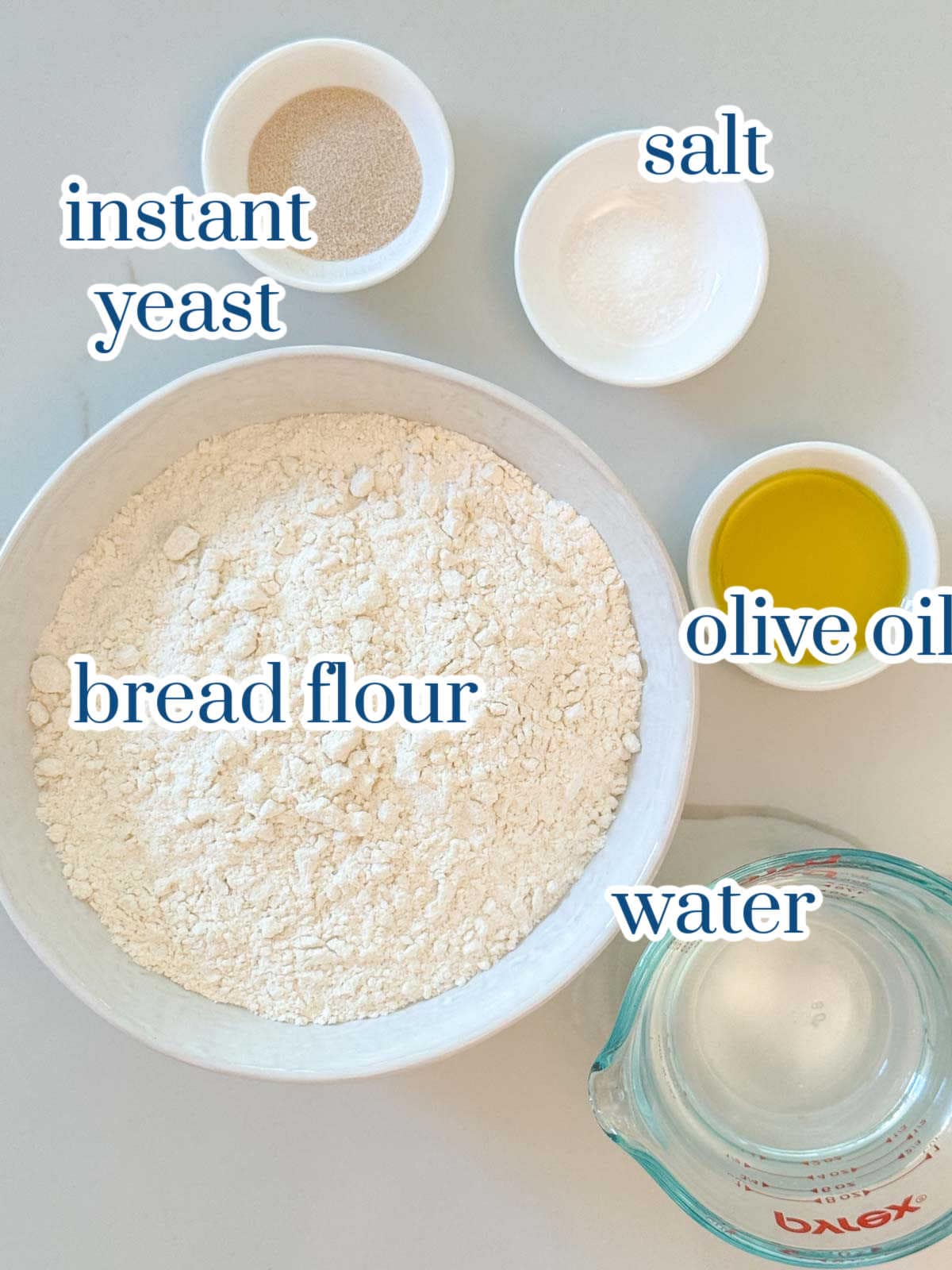
- Flour - Use bread flour for that perfect airy, chewy texture and crisp crust. All-purpose flour works, but bread flour is better. Bread flour gives you more chew and larger air bubbles that you expect from homemade focaccia bread because of its higher protein content.
- Yeast - I use SAF Instant Yeast or quick-rise yeast in this recipe - both work great and can be mixed directly into the flour.
Only have active dry yeast? That works too, just stir it into the warm water first to activate it before adding the rest of the ingredients.
Pro Tip: Whether you're using active dry or instant, fresh yeast is key for a good rise. If you're not sure whether it's fresh, check the expiration date or proof it in warm water with sugar - if it bubbles, it's ready to use.
✨Learn More: Which Yeast to Use? by King Arthur Bread Company. - Olive Oil - This is key! Use a good quality extra virgin olive oil - it gives focaccia its signature flavor and helps make the crust crispy. A bold, fruity, high-quality olive oil will make a huge difference in flavor.
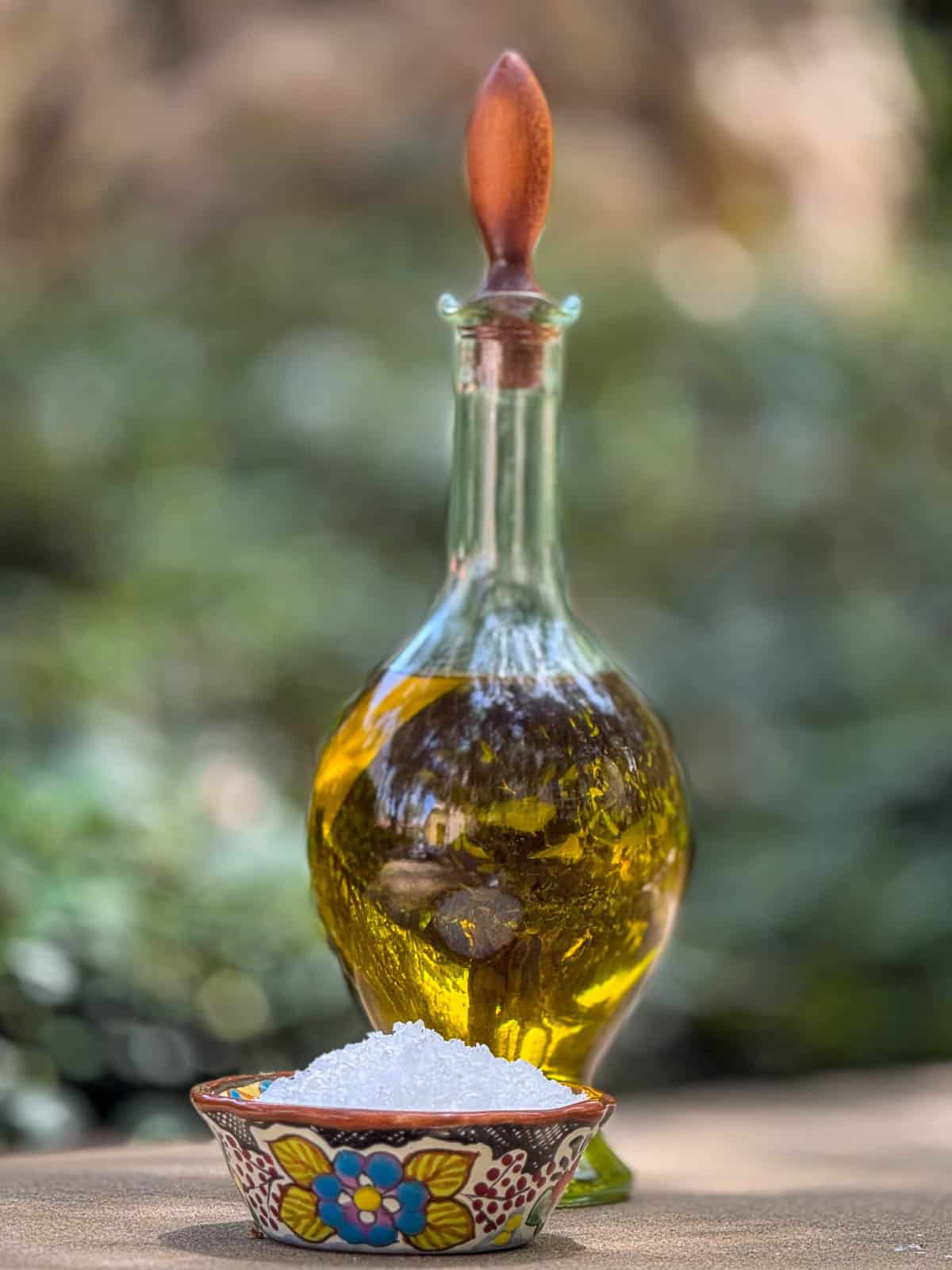
- Flaky Salt - Flaky sea salt is best for sprinkling on top of homemade focaccia bread; it adds crunch and flavor. Kosher salt also works. Don't use table salt for finishing, if you can help it.
- Fresh Herbs - Rosemary, thyme, or oregano are great additions. I always go with fresh herbs when I can - dried ones (especially rosemary) can be a little tough and woody in focaccia.
- Toppings - Go simple or creative with cherry tomatoes, olives, caramelized onions, garlic, or shredded cheese like Parmesan.
See the recipe card for full information on ingredients and quantities.
Substitutions and Topping Ideas
- All-purpose flour: Works, but crumb will be slightly less chewy.
- Kosher salt for topping: Use lightly; grains are smaller than flaky salt.
- Rosemary: Classic herb pairing.
- Olives: Add briny contrast.
- Cherry tomatoes: Press firmly into dough before baking.
- Caramelized onions: Add sweetness and depth.
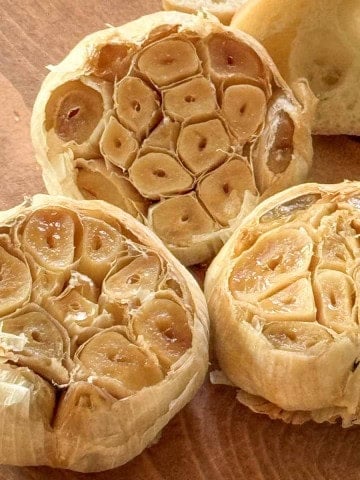
- Roasted Garlic - Soft, golden garlic cloves melt into the dough, giving each bite a mellow, savory richness.
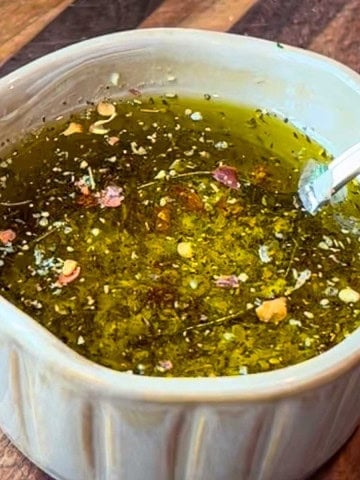
- Garlic Oil - We always keep this on hand for dipping bread, making pizzas, sauteeing vegetables, and for salad dressing.
Flavor Variations
Classic Flaky Salt Version: Olive oil + Maldon only.
Rosemary Garlic Version: Add chopped rosemary and garlic oil.
Overnight Cold Ferment Version: Refrigerate up to 24 hours for enhanced bubbles.
Sandwich Focaccia: Keep toppings light for slicing horizontally.
How to Make Easy Focaccia Bread (Step-by-Step)
Don't worry - this homemade focaccia bread recipe uses a no-mixer method and is simple, relaxing, and totally doable, even if you've never baked bread before. You'll mix the dough, let it rise, dimple it with olive oil, let it rise again, and bake it to golden perfection.
Prefer a stand mixer? You can absolutely use one, but it's not required. Let's walk through it together, one easy step at a time.
Make the Dough
Step 1. Proof the Yeast (If Needed).
Using active dry yeast? In a large bowl or stand mixer, combine the warm water (95-105°F), yeast, and sugar. After 5 to 10 minutes, the top should look foamy. That means the yeast is active and ready to go.
Using instant or quick-rise yeast? Skip this step - you'll add it straight to the flour in the next one.
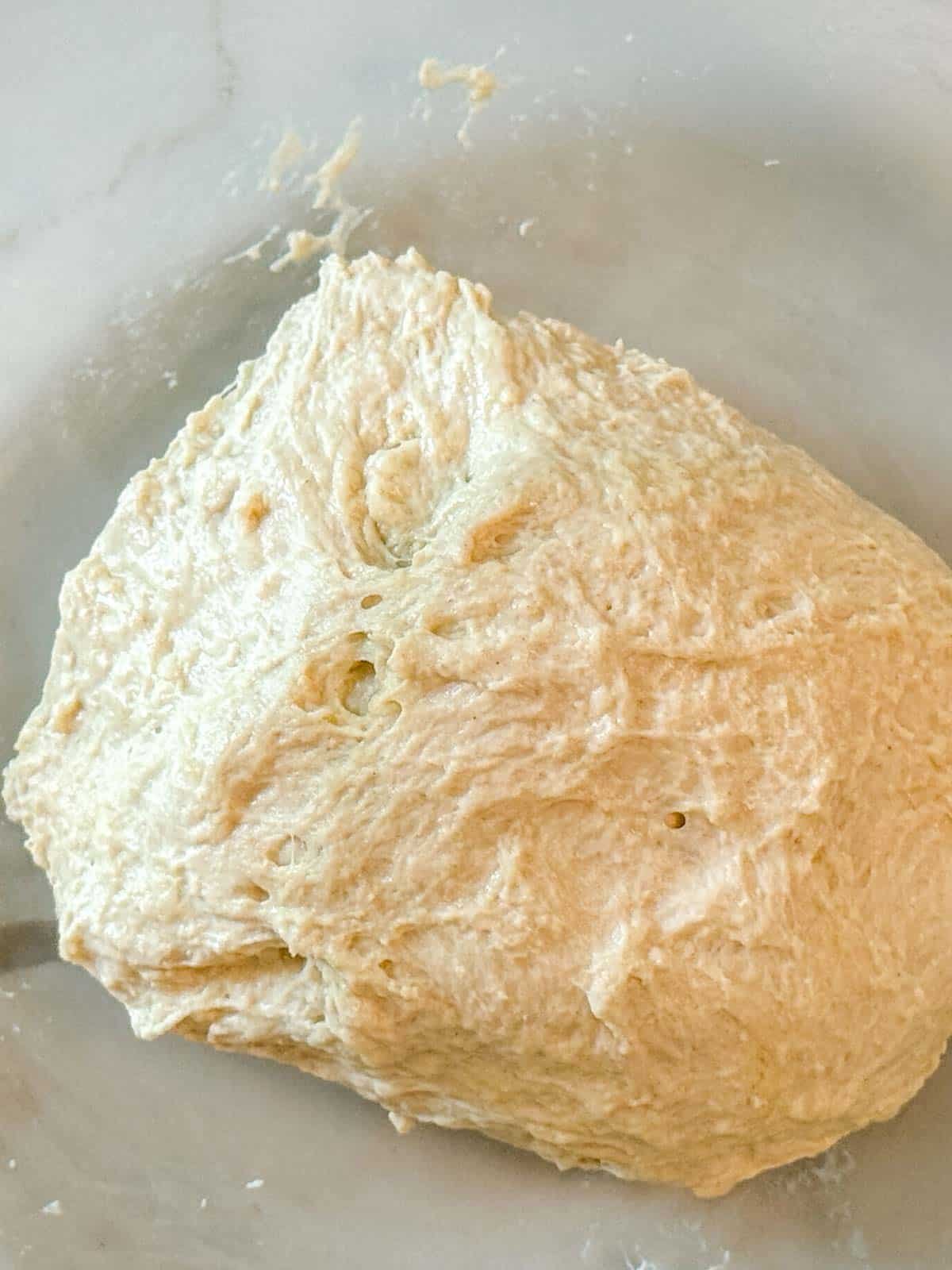
Step 2. Mix the Dough (By Hand).
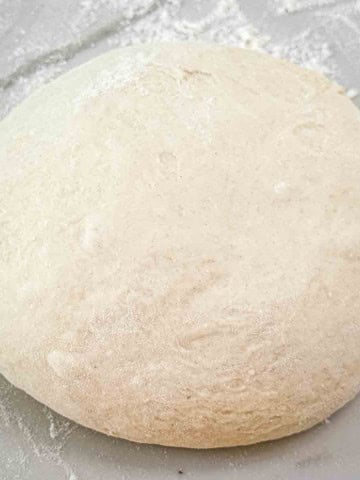
Whisk #ad flour, yeast, and salt. Stir olive oil into warm water and combine with dry ingredients until a sticky, shaggy dough forms.
Pro Tip: Sticky is correct. Resist adding extra flour.
Cover and rest 15 minutes to allow hydration and gluten development.
✨ The dough should be soft and a little tacky. If it feels dry or stiff, work in 1 to 2 tablespoons of water to loosen it up.
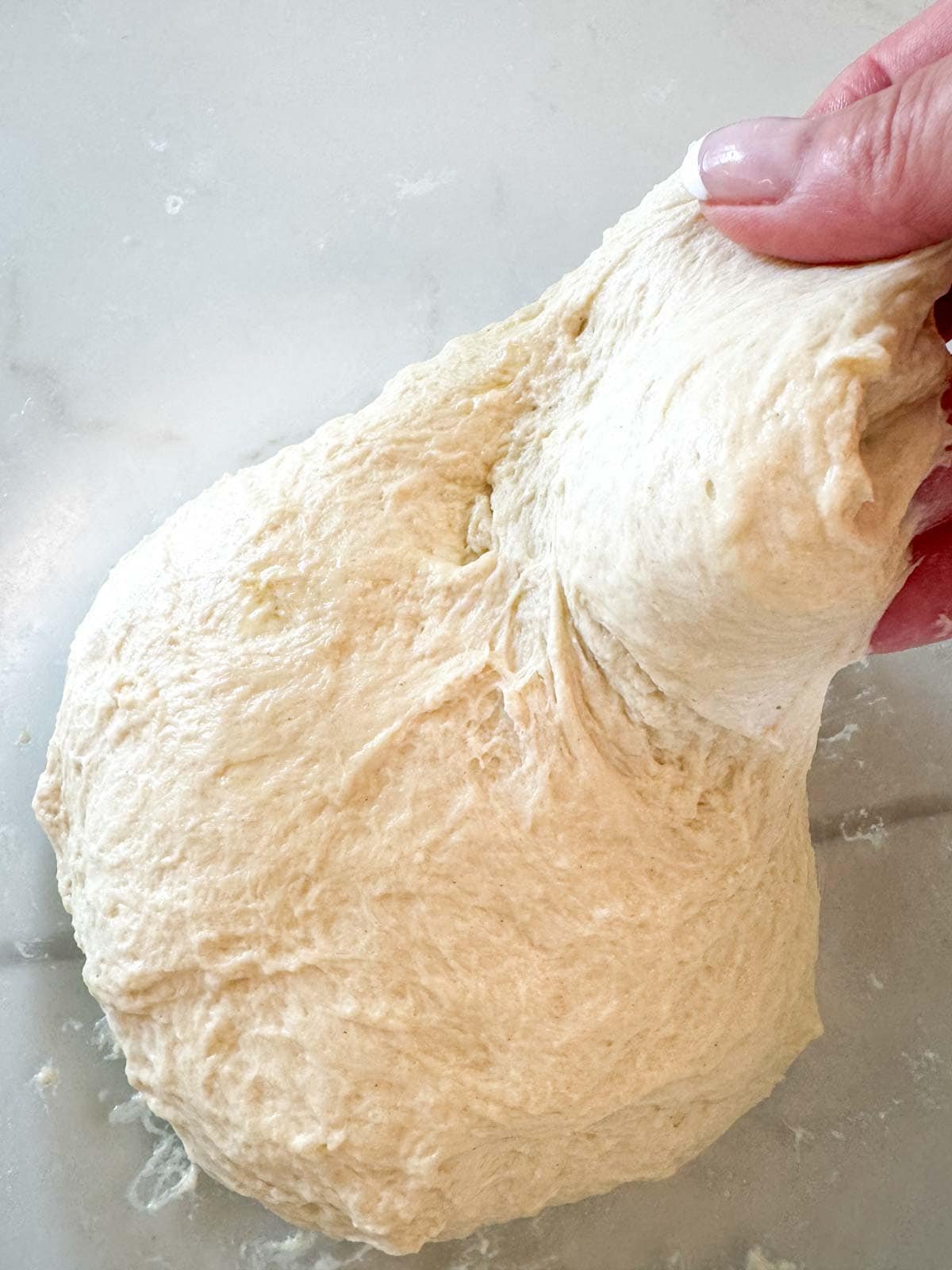
Step 3. Stretch & Fold (No Kneading Required).
With oiled fingers, stretch one side upward and fold toward center. Rotate and repeat four times. Rest 15 minutes. Repeat 2-3 rounds total.
Why this works: Stretching aligns gluten strands gradually, building elasticity without aggressive kneading.
Let the Dough Rise
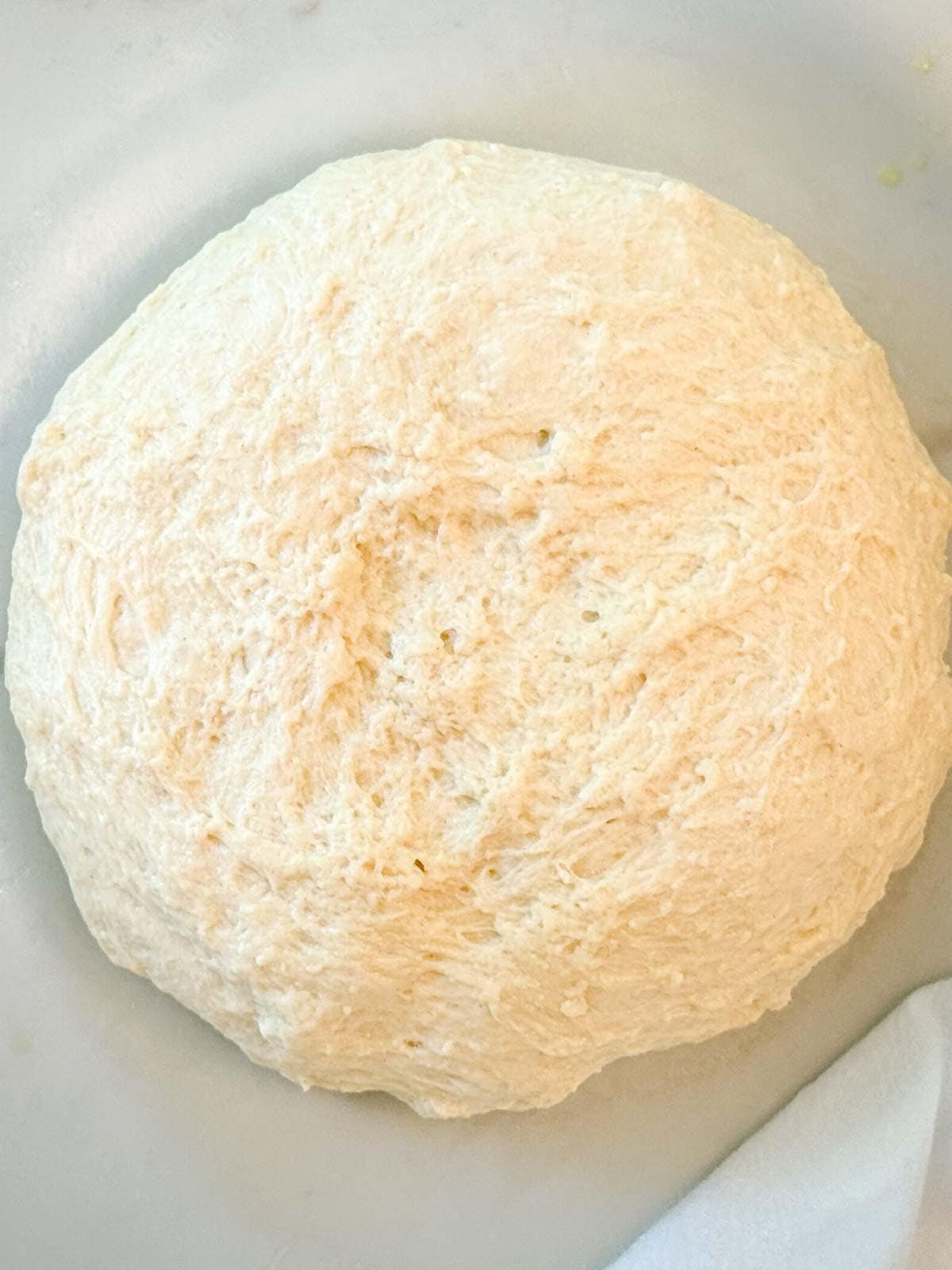
Step 4. First Rise: Fermentation
Transfer dough to an oiled 8 x 11-inch baking dish #ad before it rises. Cover and let rise 2-4 hours until puffy and slightly jiggly.
Optional Overnight Cold Ferment:
Refrigerate up to 24 hours. Bring to room temperature 1-2 hours before baking.
✨ This slow rise helps develop flavor and that beautiful airy texture you expect from homemade focaccia bread.
Preheat Oven to 450°F
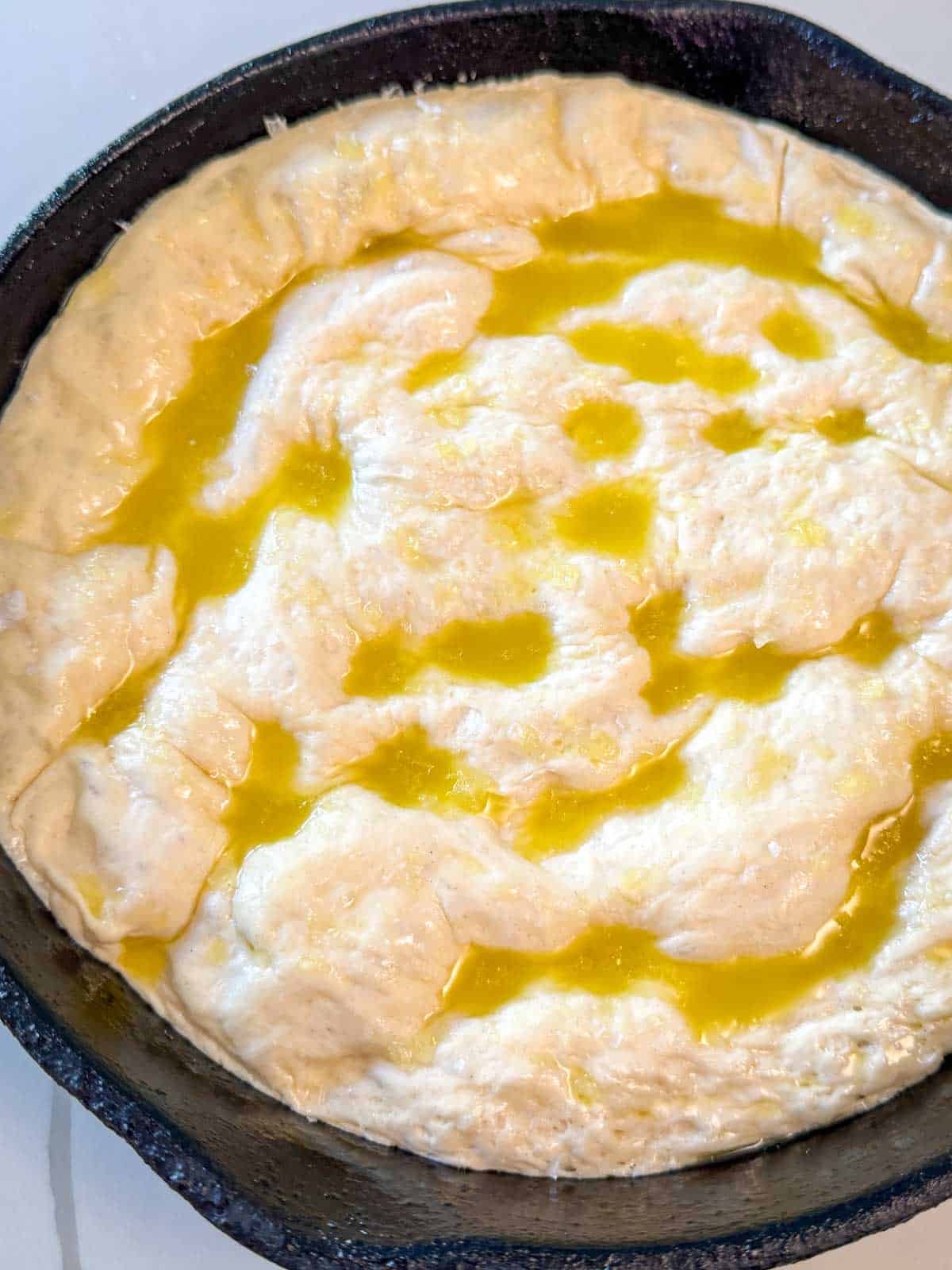
Step 7. Dimple and Add Toppings.
Oil fingertips and press deep dimples across the dough. Drizzle ¼ cup olive oil into dimples.
Sprinkle flaky salt over the top and add any additional toppings.
Step 8. Bake and Serve.
Bake for 15 minutes. If it looks like it's browning unevenly, rotate the pan and bake for 3-5 more minutes, until it's lightly golden brown.
Remove to rack. Brush lightly with olive oil if desired.
Focaccia is best served warm on the day it's made.
✨Entertaining tip: Plan to pull the homemade focaccia out of the oven right before serving so it's warm and fresh. Your kitchen will smell amazing, and guests won't be able to resist!
Tips for Airy, Golden Focaccia
- Weigh the Flour - For best results, use a kitchen scale #ad to weigh the flour instead of using measuring cups. If you do use measuring cups, measure the flour by scooping flour into the measuring cup and leveling it off with a straight edge.
- Use High Hydration for Airy Crumb. The key to that signature bubbly focaccia texture is hydration. This recipe uses 80% hydration, which creates a light, airy interior. It's what gives focaccia its soft crumb and crisp, golden crust.
- Go for a Long, Slow Rise. For even better flavor and texture, let it rise slowly in the fridge overnight. That cold ferment gives it bigger air bubbles and a deeper, more developed flavor.
- Handle it Gently. Be gentle when shaping and dimpling. Those air bubbles make the focaccia light and airy, and you don't want to press them out and deflate the focaccia.
- Bake at High Heat. Focaccia bakes best at a high temperature. We recommend 450°F, which helps the dough puff up quickly and develop a crispy, golden crust.
- Check your yeast! Whether you're using instant or active dry, make sure it's fresh. Old yeast won't rise like it should, and flat focaccia is so disappointing!
- For Extra Crispiness. Want an even crispier crust? Bake your focaccia in a cast-iron skillet or on a preheated baking stone. The extra heat from the bottom adds a great crunch.
Focaccia Troubleshooting Guide
Dough too sticky? That's normal. Traditional focaccia is a high-hydration dough, which means more water for steam expansion and open crumb. Oil your hands instead of adding extra flour.
Turned out flat? It likely needed more fermentation time, or the yeast wasn't fresh enough to build structure before baking.
Dense instead of airy? Too much flour or over-handling can collapse the air pockets formed during fermentation.
Bottom not crispy? Focaccia relies on olive oil for its crisp base. Make sure the pan is generously coated, or use cast iron for stronger bottom heat.

How To Serve Focaccia
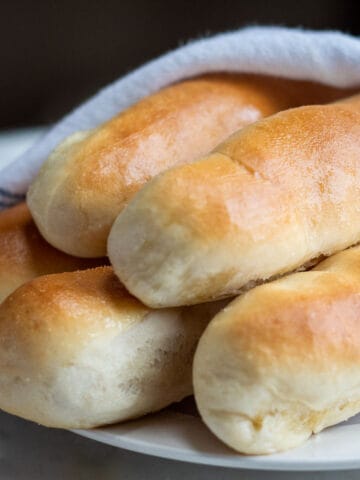
Serve warm alongside pasta, soup, or a crisp salad - or slice it thick for sandwiches like a piled-high pastrami and provolone (our favorite). Warm focaccia bread is perfect for serving with juicy grilled ribeye steak.
Focaccia Bread Recipe FAQs
The dough in this Easy Focaccia Bread Recipe is intentionally sticky because traditional focaccia uses a high-hydration dough, typically 75-85% hydration. The higher water content allows steam expansion in the oven, creating airy bubbles and a light crumb. Oil your hands instead of adding extra flour to preserve that open texture.
Big air bubbles form when the high-hydration dough in this Easy Focaccia Bread Recipe is allowed to ferment fully and is handled gently. Let the dough rise until puffy and jiggly, avoid pressing out air during dimpling.
Yes. The dough for this Easy Focaccia Bread Recipe can be refrigerated for up to 24 hours after being transferred to the oiled pan. Cold fermentation improves flavor and encourages larger air pockets. Allow the dough to rest at room temperature for 1-2 hours before baking.
The dough for this Easy Focaccia Bread Recipe should rise until it looks puffy, airy, and slightly jiggly when the pan is gently shaken. At room temperature, this typically takes 2-4 hours depending on kitchen warmth. If refrigerated overnight, allow 1-2 hours at room temperature before baking.
This Easy Focaccia Bread Recipe is fully baked when the top is golden brown and the internal temperature reaches 200-205°F. The bottom should feel firm and lightly crisp when lifted from the pan.
Storage and Make-Ahead
- Make-Ahead: Cold ferment overnight.
- Room Temp: Store up to 2 days sealed.
- Reheat: For best texture, warm slices in a 350°F oven for 5 minutes. Or if you're in a rush (we do this all the time), microwave it for about 10 seconds to soften it up.
- Freeze: Wrap slices individually and freeze up to 3 months.
If You Love This Focaccia, Try These Next


Did you love this family recipe? As a small business, the greatest compliment you can give is a 5-star rating! Tap the ⭐⭐⭐⭐⭐ directly in the recipe card below. It helps my site grow and helps other home cooks find this nostalgic, comforting meal!
📖 Recipe
Easy Homemade Focaccia Bread Recipe
Equipment
- 8 x 11-inch baking dish
- Optional: cast iron skillet for crisp bottom crust
Ingredients
Focaccia Dough Ingredients
- 2 ¼ cups bread flour (300 g)
- 1 package instant yeast (2 ¼ teaspoons, 7 g), OR 1 package active dry yeast (2¼ teaspoons, 7 g)
- 1 ½ teaspoons salt (5.25 g)
- 1 cup water (approximately) (240 g, 95-105°F)
- 1 tablespoon extra virgin olive oil
For the Pan and Topping
- 2 tablespoons extra virgin olive oil (for the pan)
- ¼ cup extra virgin olive oil (for topping and dimples)
- 1 tablespoon flaky sea salt (such as Maldon)

Instructions
Make the Dough
- Proof the Yeast (If Needed).If using active dry yeast, sprinkle it into the warm water and let sit 5 to 10 minutes until foamy. A small pinch of sugar can help activate it more quickly, but it is not required.If using instant yeast, whisk it directly into the flour and skip the proofing step.
- Mix the Dough. In a large bowl, whisk together the flour, yeast, and salt. Stir the olive oil into the warm water, then pour the mixture into the flour.Mix with a spoon, dough whisk, or dough hook just until a sticky, shaggy dough forms and no dry flour remains.The dough should feel soft and slightly tacky. If it feels dry or stiff, work in 1 to 2 tablespoons of water until fully hydrated.Cover the bowl and let rest for 15 minutes.2 ¼ cups bread flour, 1 package instant yeast, 1 ½ teaspoons salt, 1 cup water (approximately), 1 tablespoon extra virgin olive oil
- Stretch & Fold (No Kneading Required).Lightly oil your fingertips. Gently lift one side of the dough, stretch it upward, and fold it toward the center. Rotate the bowl and repeat until you've gone all the way around the bowl, about 4 folds total. That completes one round.Cover and rest 15 minutes.Repeat this process 2 to 3 rounds total, resting 15 minutes between each round. The dough will gradually become smoother and more elastic.✨ You'll know it's ready when the dough feels smoother and more elastic than when you started. It should stretch easily, feel soft and slightly sticky, and begin to pull together as one cohesive dough.
- Fermentation (First Rise in the Pan).Pour 2 tablespoons extra virgin olive oil into an 8 x 11-inch baking dish and spread evenly across the bottom and sides.Transfer the dough to the oiled pan before it rises.Cover loosely and let rise at room temperature until puffy, airy, and relaxed, about 2 to 4 hours depending on the temperature of your kitchen. The dough should look soft and slightly jiggly when gently shaken.✨ This slow rise develops flavor and creates that beautiful airy texture focaccia is known for.2 tablespoons extra virgin olive oil
- Optional Overnight Dough (Cold Ferment)Want to make it ahead? After transferring the dough to the oiled pan, cover and refrigerate overnight, up to 24 hours.Cold fermentation deepens flavor and gives you flexibility to bake the next day.The dough will not rise much in the refrigerator. That's normal. The rise happens as it comes back to room temperature.The next day, let it rest at room temperature for 1 to 2 hours, until no longer cold and it begins to rise. Then proceed with the recipe.
Preheat the oven to 450°F.
Dimple and Top
- Lightly oil your fingertips and gently press deep dimples all across the surface of the dough.Drizzle the remaining ¼ cup olive oil evenly over the dough, letting it pool into the dimples.Sprinkle with Maldon flaky sea salt.Add toppings if desired. Classic options include fresh rosemary, thinly sliced onion, olives, or cherry tomatoes. For our favorite variation, drizzle with garlic oil and sprinkle with Italian seasoning before baking.Press toppings gently into the dough so they anchor during baking.¼ cup extra virgin olive oil, 1 tablespoon flaky sea salt
Bake and Serve
- Bake for 15 minutes. Rotate the pan if needed and bake another 3 to 5 minutes, until lightly golden with crisp edges.Remove to a cooling rack. If desired, brush lightly with olive oil while warm for extra flavor and shine.Homemade focaccia bread is best served warm on the day it’s made.
Notes
• For deeper flavor and larger air pockets, refrigerate the dough overnight for a slow cold ferment.
• Use fresh yeast and bread flour for optimal structure and rise.
• Bake at 450°F until fully golden and confirm doneness with an internal temperature of 200–205°F.
• For an extra crisp bottom, bake in a well-oiled pan or cast-iron skillet. This recipe has been tested using both same-day and overnight fermentation methods to ensure reliable results for home cooks. From our Midwestern kitchen to yours — where food is love, and cooking is community.

Megan says
Love this recipe! The crispy edges and soft center are just perfect. And I love that it can be made in my cast iron skillet.
Seanna Borrows says
Thank you! I'm so glad you love this recipe! It's our family's favorite for pastrami and provalone sandwiches.
Seanna Borrows says
📌 Recipe Update — February 2026
I refreshed this Easy Focaccia Bread Recipe with a clearer hydration explanation, improved fermentation timing, and a troubleshooting guide to help you get those beautiful airy bubbles every time.
If you’ve made this before, you’ll notice the instructions are even more detailed and beginner-friendly now.
Let me know what topping you try!
Laura says
I love focaccia bread. This recipe is so simple to make. Thanks for sharing!
Seanna says
Thank you Laura! I really appreciate it!
Russ B says
This is awesome focaccia! Pro tip: Use with warm pastrami and provolone sandwiches!! Coming soon to Seanna's Kitchen??
Seanna says
Thank you! I'll get our Pastrami Sandwich on Focaccia recipe out there soon.